Why Linen Sheets Are Good to Sleep In (The Honest Answer)
Posted: 30 July 2026
Ask anyone who's made the switch to linen sheets and they'll say the same thing...
It's not that the sheets feel cool, or soft, or look beautiful on the bed (though all of that is true).
They'll say, usually, that they just sleep better.
It's a harder thing to explain than it sounds. But once you understand what linen actually is and how it behaves as a fabric, it starts to make complete sense.
Here's the honest answer to why linen sheets are so good to sleep in.

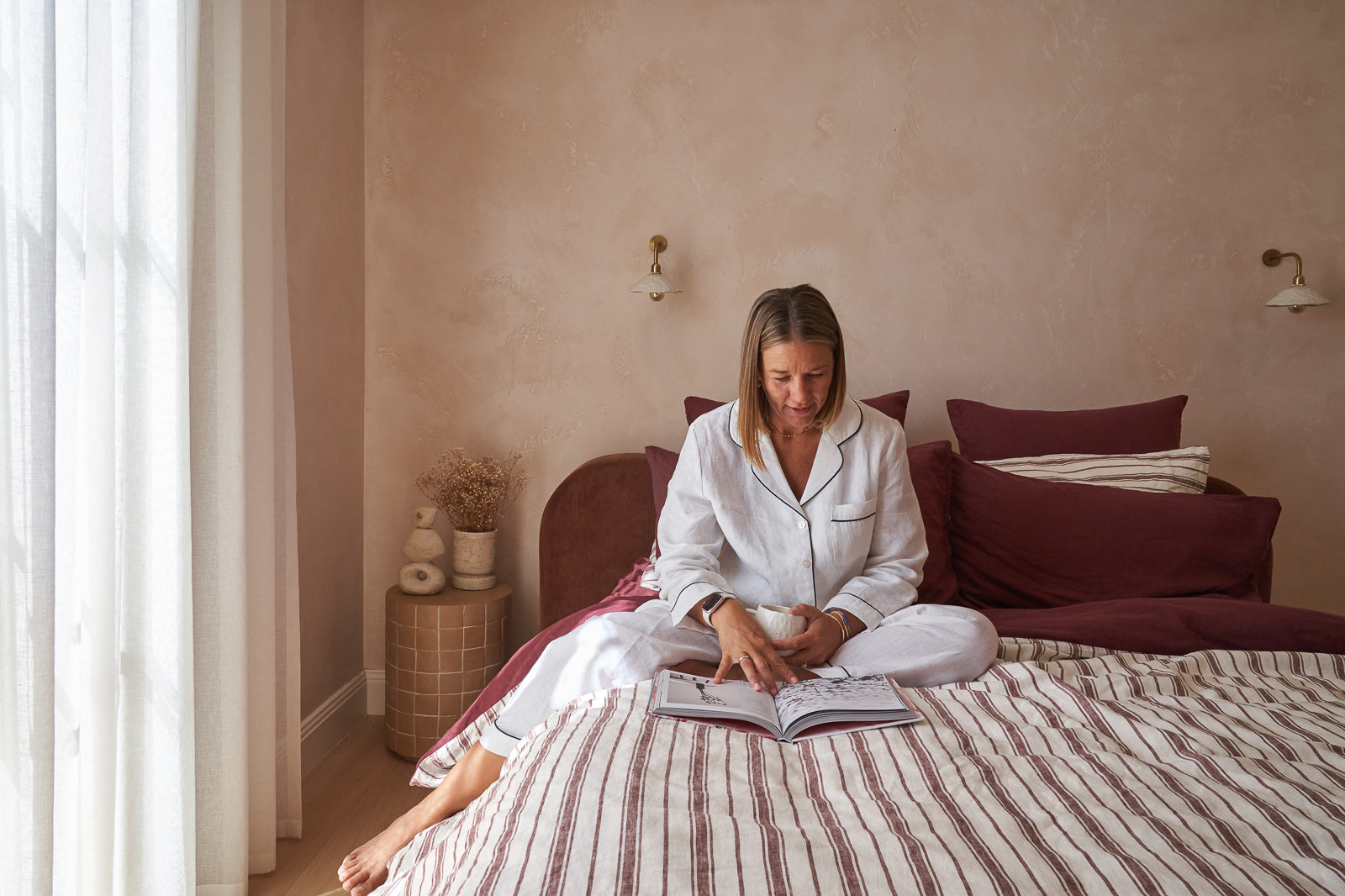
Styled with our Sheet Set in Cherrywood

Linen regulates your temperature all night
This is the big one. Most people assume linen is a summer fabric, something you swap in when it gets warm and swap out again in winter. That's not quite right. Linen is a temperature-regulating fabric, which means it works year-round.
How? Well linen absorbs moisture, up to 20% of its own weight, and releases it quickly back into the air. As it does, it draws warmth away from your body without trapping it.
In summer, that means you stop overheating at 3am. In winter, linen traps just enough warmth to feel cosy without making you sweat. It's the rare fabric that genuinely works in both directions.
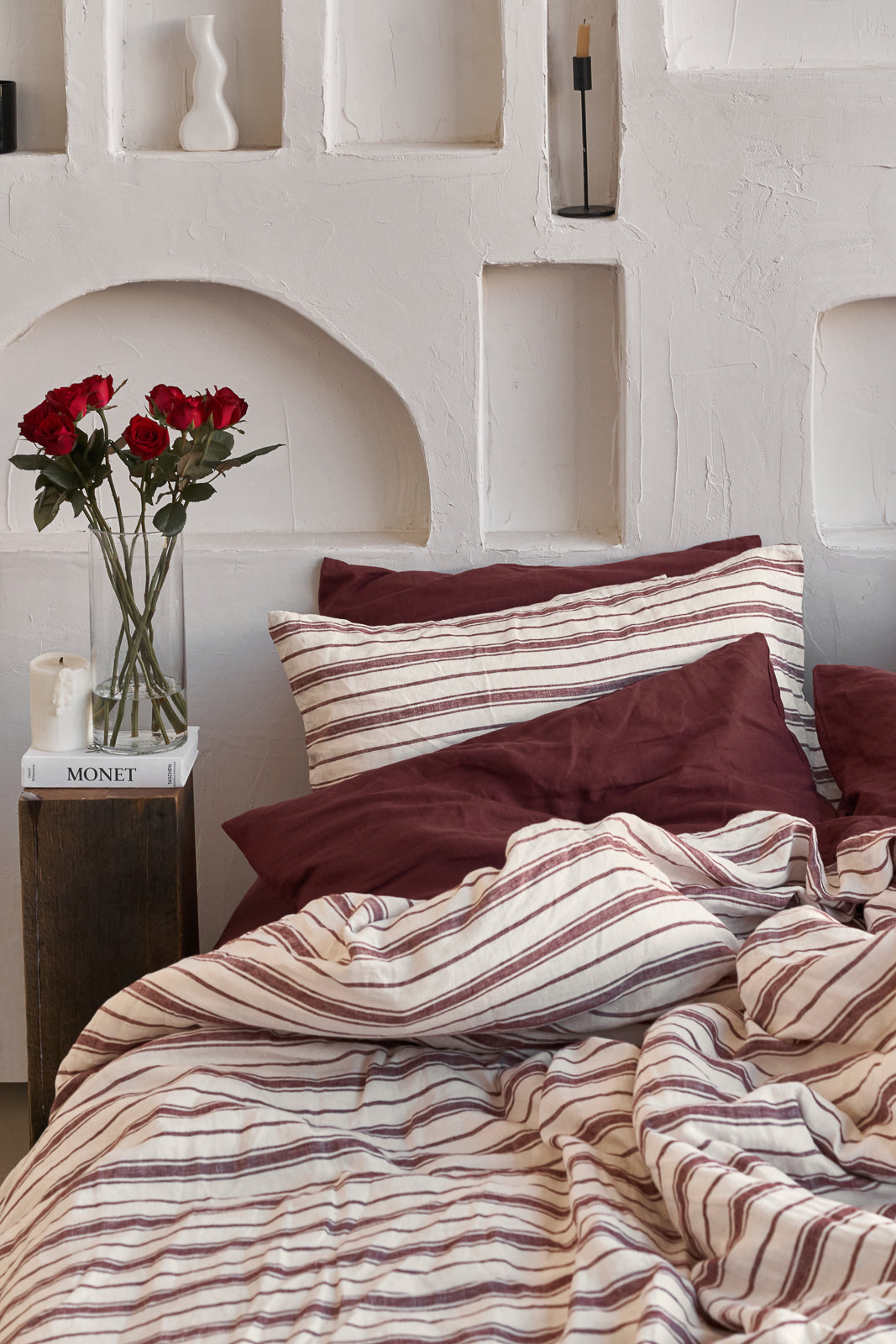

Linen is breathable in a way most fabrics aren't
Air moves through linen's natural weave freely. That sounds like a small thing but it makes an enormous difference over the course of a night.
Synthetic fabrics, polyester, microfibre, poly-cotton blends, don't breathe. They trap air and heat against your skin, which is why you can wake up feeling sticky and uncomfortable even in a cool room. Cotton breathes better than synthetics but still traps more moisture than linen.
Linen's structure is different. The long, hollow fibres that make up the fabric allow air to circulate constantly, which keeps the microclimate of your bed stable rather than stuffy. For anyone who runs warm, wakes up during the night, or just struggles to stay comfortable through the small hours — this is the difference.

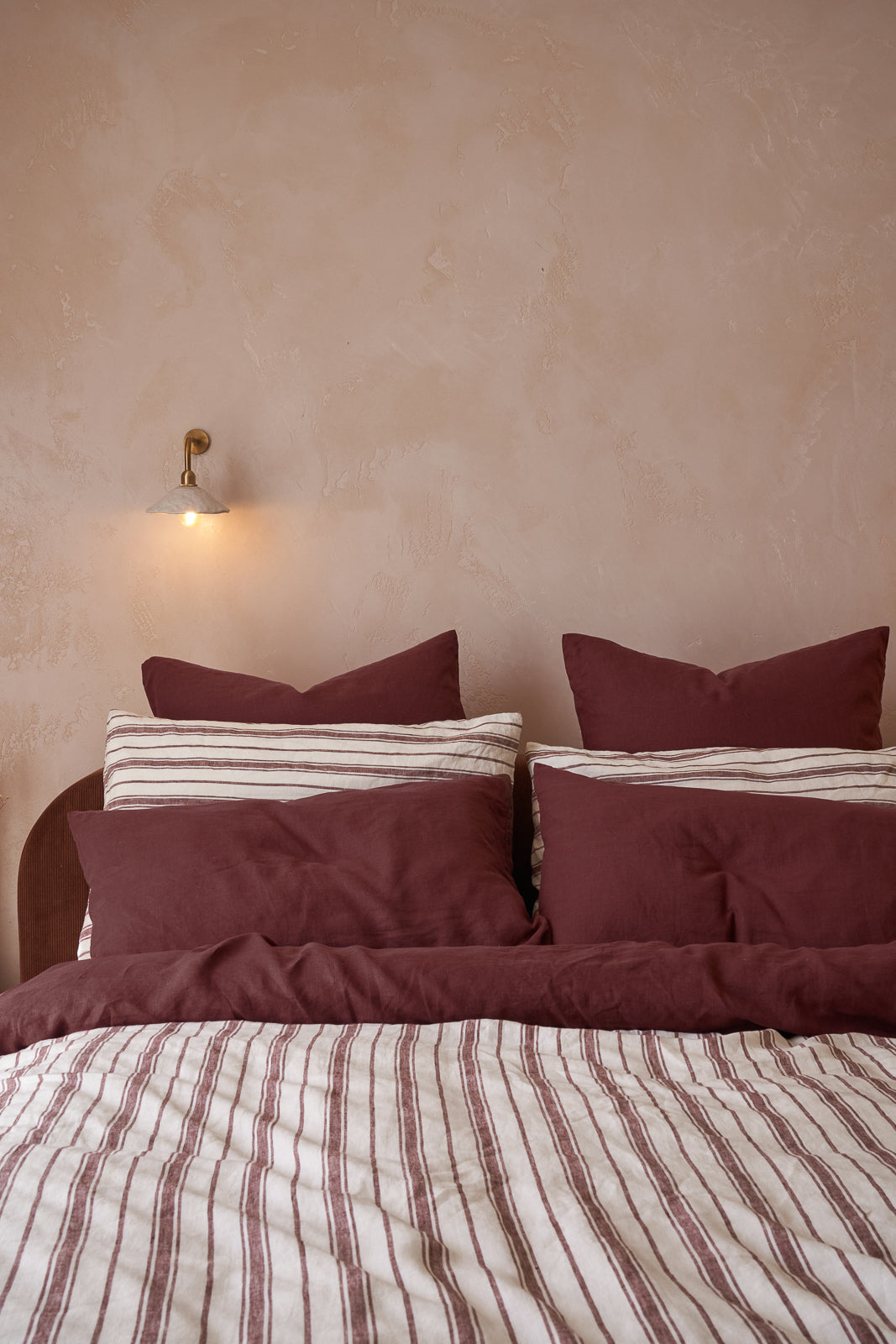
Styled with our French Flax Linen Double Sided Quilt Cover in Cherrywood/Cherrywood Stripe
Linen gets softer over time, not worse
Most bedding has a ceiling. It feels its best when it's new, and slowly deteriorates from there. Linen is the opposite.
The more you wash and sleep in linen, the softer it becomes. The fibres relax with use, developing a texture that's impossible to replicate in a factory, lived-in, fluid, and completely unique to your sheets. A set of linen sheets that's been on your bed for three years feels different to a new set, and most people prefer the older ones.
This is also why good linen bedding is stonewashed before it reaches you. Stonewashing accelerates that breaking-in process, so the softness is there from the very first night rather than after twenty washes. You're not waiting for it to become itself, it already is.

Styled with our French Flax Linen Double Sided Quilt Cover in Cherrywood/Cherrywood Stripe
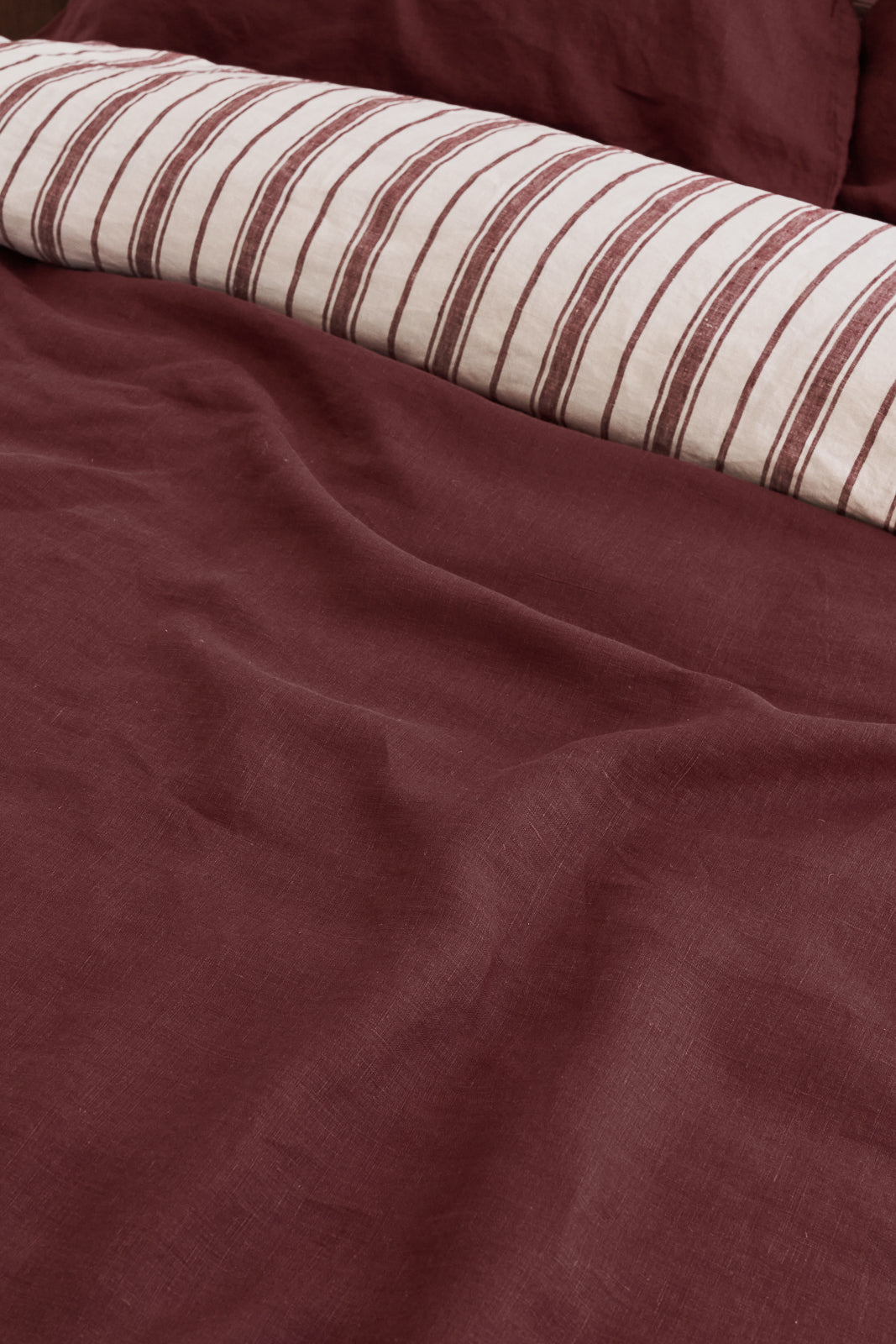

Linen is hypoallergenic and naturally antimicrobial
Linen has natural properties that make it particularly good for sensitive skin and anyone who struggles with allergies. The fabric is naturally hypoallergenic, resistant to bacteria, and doesn't collect dust mites the way synthetic materials can.
It also stays fresher for longer between washes. The moisture-wicking properties that regulate your temperature also prevent the damp, warm conditions that bacteria thrive in, which is why linen sheets tend to smell clean longer than cotton or synthetic alternatives.
For anyone with eczema, sensitive skin, or allergies, linen is often the first recommendation from dermatologists and sleep specialists alike.

Styled with our French Flax Linen Double Sided Quilt Cover in Cherrywood/Cherrywood Stripe
Why French flax linen specifically
Not all linen is made equal. French flax linen, grown in the cool, fertile fields of northern France and Belgium, is widely regarded as the finest in the world. The climate produces long, strong fibres that result in a smoother, more durable fabric with a superior drape and feel.
The journey from seed to sheet takes roughly six months. Flax is planted in spring, harvested in summer, left in the field through autumn for a natural retting process that can't be rushed or automated, then processed and woven through winter. By the time French flax linen reaches your bed, it has already lived an entire year.
That process is why it performs the way it does. And it's why, once you've slept in it, going back to anything else feels like a genuine step backwards.
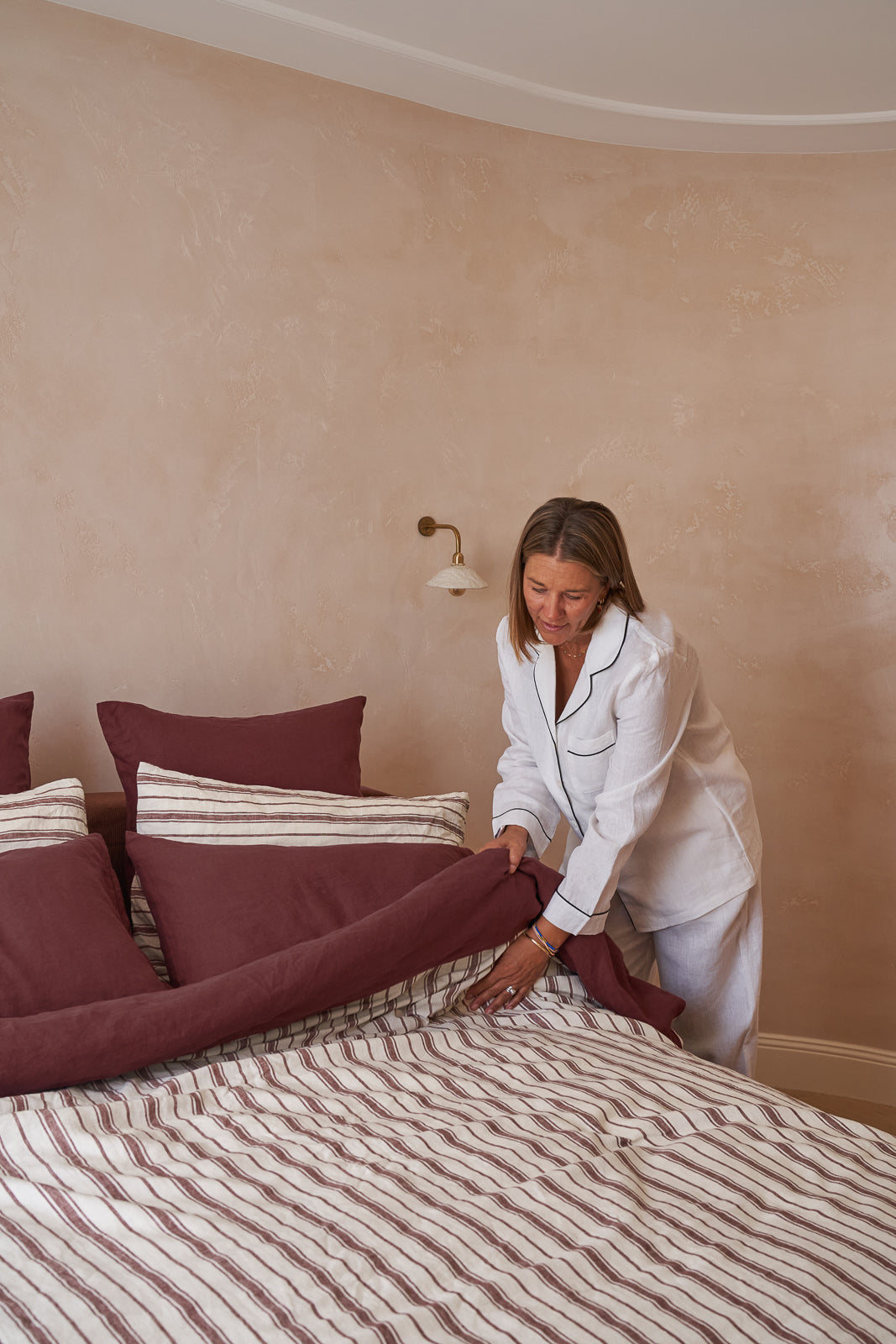

Linen suits every season and every sleep style
Back sleeper, side sleeper, stomach sleeper linen works for all of them, because its benefits aren't positional. Temperature regulation, breathability, moisture management: these work regardless of how you sleep.
It also suits every season, every climate, and every body temperature. Hot sleepers love it because it stops them overheating. Cold sleepers love it because it's insulating enough to keep them warm. Couples with different sleep temperatures, one always cold, one always warm, often find linen is the one fabric that works for both of them simultaneously.
Similar inspiration