What Doona Is The Best For My Bed?
Posted: 16 November 2026
The right doona depends on three things: how warm you sleep, the season you're buying for, and what's actually inside the doona rather than what the cover looks like.
Start With How You Actually Sleep, Not The Season Alone
Two people in the same climate can want completely different doonas. If you run warm and wake up kicking off the covers by 2am, a heavier doona works against you no matter what the calendar says. If you're someone who's cold even in summer, a lighter doona leaves you reaching for an extra blanket most nights. Buy for your own temperature pattern first, and treat the season as a secondary factor rather than the main one.


Understanding Fill Weight
Doonas are usually rated by a GSM number, grams per square metre, which tells you roughly how much insulating material is packed in.
A lower GSM, generally under 300, suits summer or a warm sleeper. A mid-range GSM around 300 to 400 (like our Hotel Cloud Quilt) works for most of the year in a mild climate. Anything above that moves into winter-weight territory, better suited to someone who runs cold or lives somewhere with genuinely cold nights. This number matters more than the words "summer" or "winter" printed on the packaging, since those labels vary between brands.


Matching Your Doona To Your Sheets
A heavy doona under warm, insulating sheets can feel like too much all at once, even if each individual piece is reasonable on its own.
This is part of why linen sheets pair so well with a range of doona weights. Linen manages temperature well enough that it doesn't stack heat on top of whatever the doona is already doing, so you've got more flexibility in picking the doona weight without worrying it'll all add up to overheating.

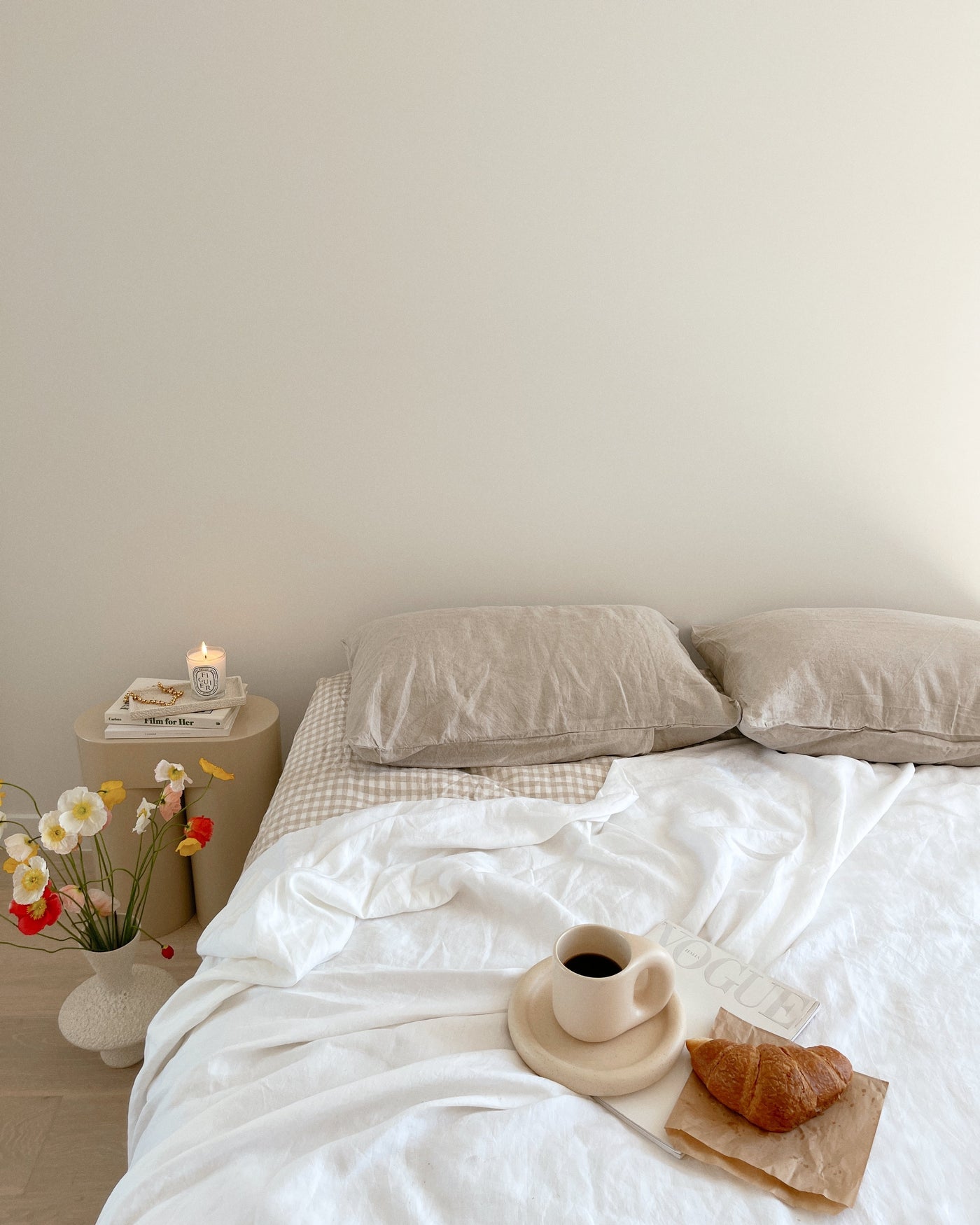
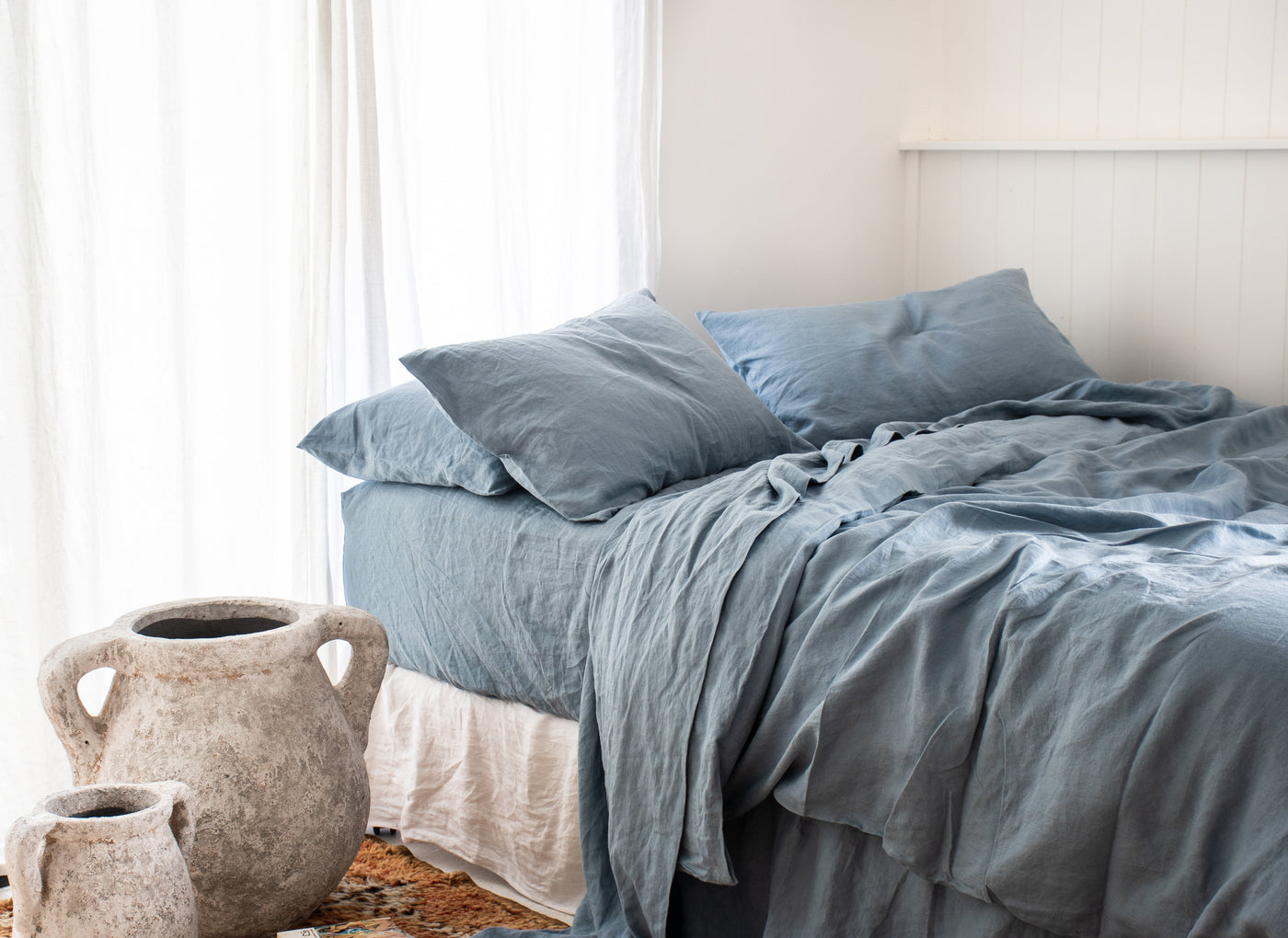
Styled with our French Flax Linen Quilt Cover in Clay and Flat Sheet in Chocolate Gingham


Two Doonas Beats One Compromise
If you and a partner run at different temperatures, or if your climate swings a lot between seasons, owning two doonas of different weights and swapping between them solves a problem that no single "medium" doona ever really solves well. Some households go further and use two single doonas on a shared bed instead of one doona covering both sleepers, so each person can pick their own warmth level independently.
The best doona for your bed is the one that matches how warm you actually run at night, paired with sheets that don't work against it.